
Juggling work, family, and daily responsibilities leaves little time for cooking elaborate meals, yet you still want nutritious food that tastes amazing. Air fryers solve this dilemma by delivering crispy, flavorful dishes in minutes with minimal oil, making healthy eating accessible even on your busiest days. This guide will teach you how air fryers work, essential preparation techniques, step by step cooking methods, and delicious recipes to transform your kitchen routine and enjoy meals that satisfy both your taste buds and your wellness goals.
Table of Contents
- How air fryers work: Understanding the basics
- Preparing your air fryer for success
- Step by step air frying: Cooking techniques and tips
- Popular healthy air fryer recipes and nutrition benefits
- Discover more air fryer recipes and tips at AirFry Pro
- FAQ
Key takeaways
| Point | Details |
|---|---|
| Hot air circulation | Air fryers use rapid air movement to cook food evenly and create crispy textures with little to no oil. |
| Preheat for best results | Preheating your air fryer ensures food starts cooking at the correct temperature for optimal crispiness. |
| Avoid overcrowding | Cooking in batches or using racks allows proper air flow and prevents soggy, unevenly cooked food. |
| Light oil coating | A small amount of high smoke point oil enhances browning and texture without excess calories. |
| Monitor cooking times | Air fryers cook faster than ovens, so check food early to prevent burning or drying out. |
How air fryers work: Understanding the basics
Air fryers are essentially compact convection ovens that pack serious cooking power into a countertop appliance. Air fryers function as convection ovens, utilizing a heating element and fan to circulate hot air for even cooking. The magic happens when the powerful fan pushes hot air around your food at high speed, creating a crispy exterior similar to deep frying but without submerging ingredients in oil.
The compact cooking chamber makes all the difference in performance. Air fryers circulate air more aggressively in a smaller space than ovens, leading to faster and crispier results for smaller portions. This concentrated heat distribution means your chicken wings or sweet potato fries cook evenly on all sides, developing that golden brown crust you crave.
You can achieve excellent results with little to no oil, though a light coating often improves texture and browning. The rapid cooking process also preserves moisture inside your food while crisping the outside, giving you tender, juicy centers with satisfying crunch. Understanding these principles helps you make better decisions about temperature settings and cooking times.
Here are the key advantages of air fryer cooking:
- Reduced oil consumption compared to traditional frying methods
- Faster cooking times than conventional ovens
- Even heat distribution for consistent results
- Less kitchen heat and minimal cooking odors
- Easy cleanup with removable, dishwasher safe parts
For home cooks seeking healthier options without sacrificing flavor, air fryers deliver remarkable versatility. Once you grasp how hot air circulation creates that crispy magic, you can apply these air fryer cooking basics to virtually any ingredient and unlock countless meal possibilities.
Preparing your air fryer for success
Proper preparation sets the foundation for exceptional air fryer results every single time. Start by cleaning the basket and tray before each use to remove any residual oil or food particles that could affect flavor or create smoke. A quick wipe with a damp cloth takes seconds but prevents unwanted tastes from transferring to your fresh ingredients.

Preheating makes a significant difference in final texture. Preheating ensures that food starts cooking at the correct temperature, leading to crispier results. Most air fryers need just three to five minutes to reach optimal temperature, and this brief wait pays off with better browning and more even cooking from the first minute.
Choosing the right oil and applying it correctly elevates your dishes. Use oils with higher smoke points and use small amounts, cooking in batches or using a rack if your model allows to avoid overcrowding. A light spray or one to two teaspoons brushed onto food enhances browning without adding excessive calories. The table below compares popular cooking oils for air frying:
| Oil Type | Smoke Point | Flavor Profile | Best For |
|---|---|---|---|
| Avocado oil | 520°F | Mild, buttery | High heat cooking, versatile use |
| Canola oil | 400°F | Neutral | Everyday cooking, budget friendly |
| Light olive oil | 465°F | Subtle fruity | Vegetables, chicken, fish |
| Grapeseed oil | 420°F | Clean, light | Delicate foods, Asian dishes |
Proper basket loading prevents the most common air fryer mistake. Arrange food in a single layer with space between pieces to allow hot air to circulate freely around each item. When cooking larger batches, work in multiple rounds rather than cramming everything in at once. Your patience will be rewarded with uniformly crispy food instead of soggy disappointments.
Pro Tip: Keep a small spray bottle filled with your preferred high smoke point oil for quick, even application that uses less oil than pouring or brushing.
These air fryer preparation tips take minimal effort but dramatically improve your cooking outcomes. Investing a few extra minutes in setup ensures you get restaurant quality crispiness at home. Reference the air fryer cooking cheat sheet to master temperature and timing combinations that work perfectly with your preparation routine.
Step by step air frying: Cooking techniques and tips
Following a consistent process ensures reliable results whether you are cooking vegetables, proteins, or snacks. These five steps guide you through successful air frying:
- Preheat your air fryer to the temperature specified in your recipe, typically between 350°F and 400°F for most foods.
- Lightly coat food with oil using a spray bottle or brush, applying just enough to promote browning without creating puddles.
- Place food in the basket without stacking or overlapping pieces, leaving gaps for air circulation around each item.
- Set the timer based on food type and portion size, checking a few minutes early since air fryers cook food quickly, reducing cooking time and the need for oil.
- Shake the basket or flip food halfway through cooking to ensure all sides develop even crispness and golden color.
Mastering timing prevents the most frustrating cooking failures. Air fryers work faster than conventional ovens, so recipes designed for traditional baking need adjustment. Start checking your food a few minutes before the recommended time, especially when trying a new recipe or ingredient. You can always add more time, but you cannot undo burnt or dried out food.
Common mistakes sabotage otherwise perfect meals. Overcrowding prevents proper air circulation, resulting in soggy food that never achieves the crispy texture you want. Skipping the preheat step means your food starts cooking at a lower temperature, leading to longer cook times and less browning. Ignoring the speed advantage causes overcooked, tough results instead of tender, juicy centers.
Avoid these pitfalls:
- Filling the basket more than halfway full
- Using cooking spray with propellants that damage nonstick coatings
- Forgetting to shake or flip food during cooking
- Setting timers and walking away without checking progress
- Cooking wet battered foods that drip and create mess
Pro Tip: Set a phone alarm for the halfway point of your cooking time as a reminder to shake the basket, ensuring even browning on all sides.
Consult the air fryer time and temperature guide when adapting your favorite recipes or trying new ingredients. Start with recommended settings, then adjust based on your preferences and your specific model's performance. Try making air fryer frozen fries as your first recipe to build confidence with timing and technique before moving to more complex dishes.
Popular healthy air fryer recipes and nutrition benefits
Air frying transforms nutritious ingredients into crave worthy meals that support your health goals. Air fryer cooking delivers crispy texture with far less oil and fat than traditional deep frying, making it easier to enjoy satisfying food without excess calories. The high heat and rapid air circulation preserve nutrients better than some cooking methods while developing rich, complex flavors.
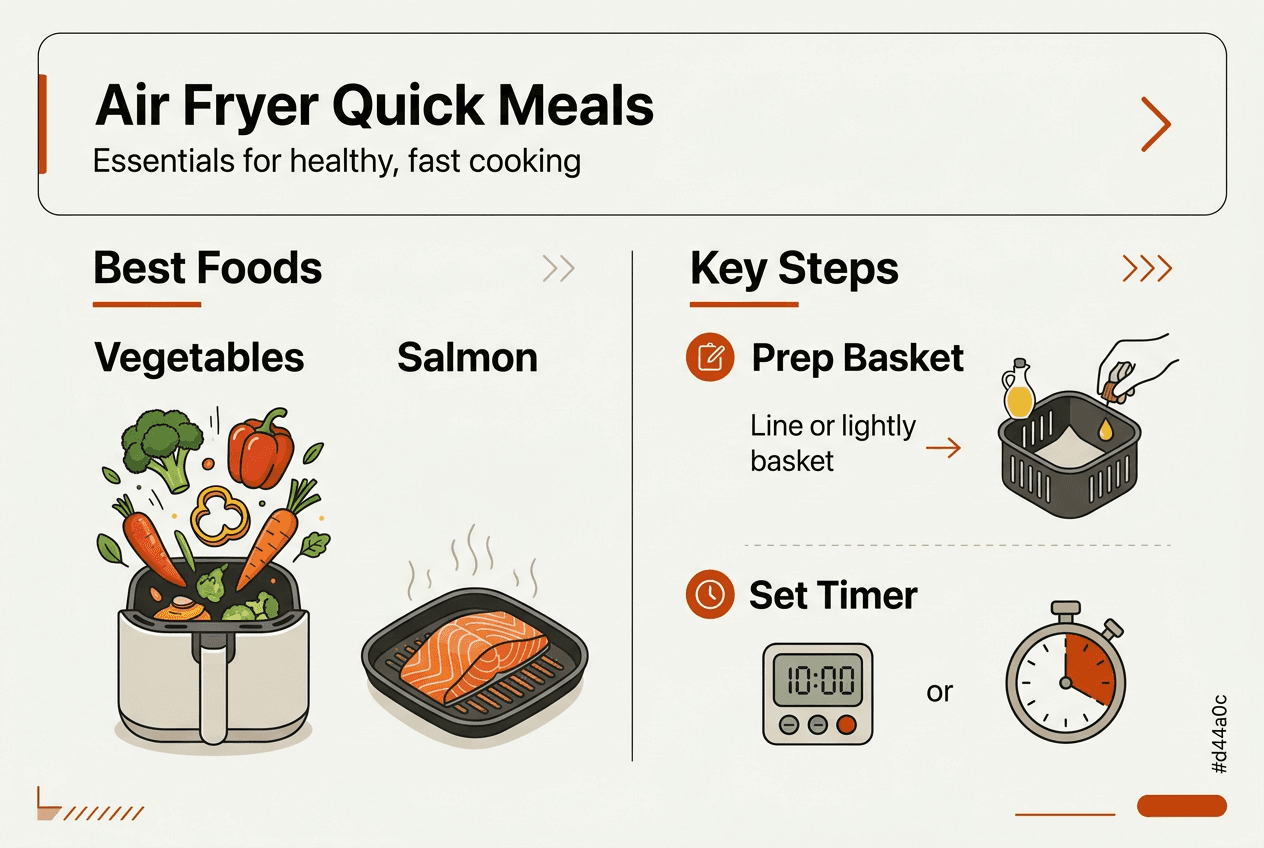
Salmon stands out as an exceptional air fryer choice. Salmon is a healthy air fryer food, packed with high quality protein, heart healthy omega 3 fats, and valuable micronutrients. A six ounce fillet cooks in just 10 minutes at 400°F, emerging with a perfectly crispy skin and moist, flaky interior. The omega 3 fatty acids support brain function, reduce inflammation, and promote cardiovascular health.
The comparison table below highlights popular nutritious foods perfect for air frying:
| Food | Calories per Serving | Cook Time | Primary Health Benefits |
|---|---|---|---|
| Salmon fillet (6 oz) | 280 | 10 min | Omega 3s, protein, vitamin D |
| Chicken breast (6 oz) | 180 | 15 min | Lean protein, B vitamins |
| Brussels sprouts (1 cup) | 56 | 12 min | Fiber, vitamin C, antioxidants |
| Cauliflower florets (1 cup) | 25 | 10 min | Fiber, vitamin K, low calorie |
| Sweet potato fries (1 cup) | 130 | 18 min | Vitamin A, fiber, complex carbs |
Vegetables become irresistibly delicious when air fried, making it easier to meet your daily intake goals. Brussels sprouts develop caramelized edges, cauliflower transforms into crispy bites, and zucchini slices turn into addictive chips. The minimal oil requirement means you get maximum vegetable nutrition without drowning ingredients in fat.
Maximize nutrition and flavor with these tips:
- Season vegetables with herbs and spices instead of heavy sauces to keep calories low
- Choose skin on chicken and fish for extra flavor and moisture retention
- Cut ingredients into uniform sizes for even cooking and consistent texture
- Experiment with different marinades to add variety without extra fat
- Pair air fried proteins with fresh salads or steamed vegetables for balanced meals
Explore the air fryer salmon recipe for a restaurant quality dish ready in minutes. Browse more healthy foods to air fry and discover how easy it becomes to prepare nutritious meals that taste indulgent while supporting your wellness journey.
Discover more air fryer recipes and tips at AirFry Pro
Ready to expand your air fryer skills beyond the basics? AirFry Pro offers hundreds of tested, healthy recipes designed for home cooks at every skill level, from beginners to experienced chefs. Each recipe includes detailed instructions, precise temperature settings, and cooking times that take the guesswork out of meal preparation.
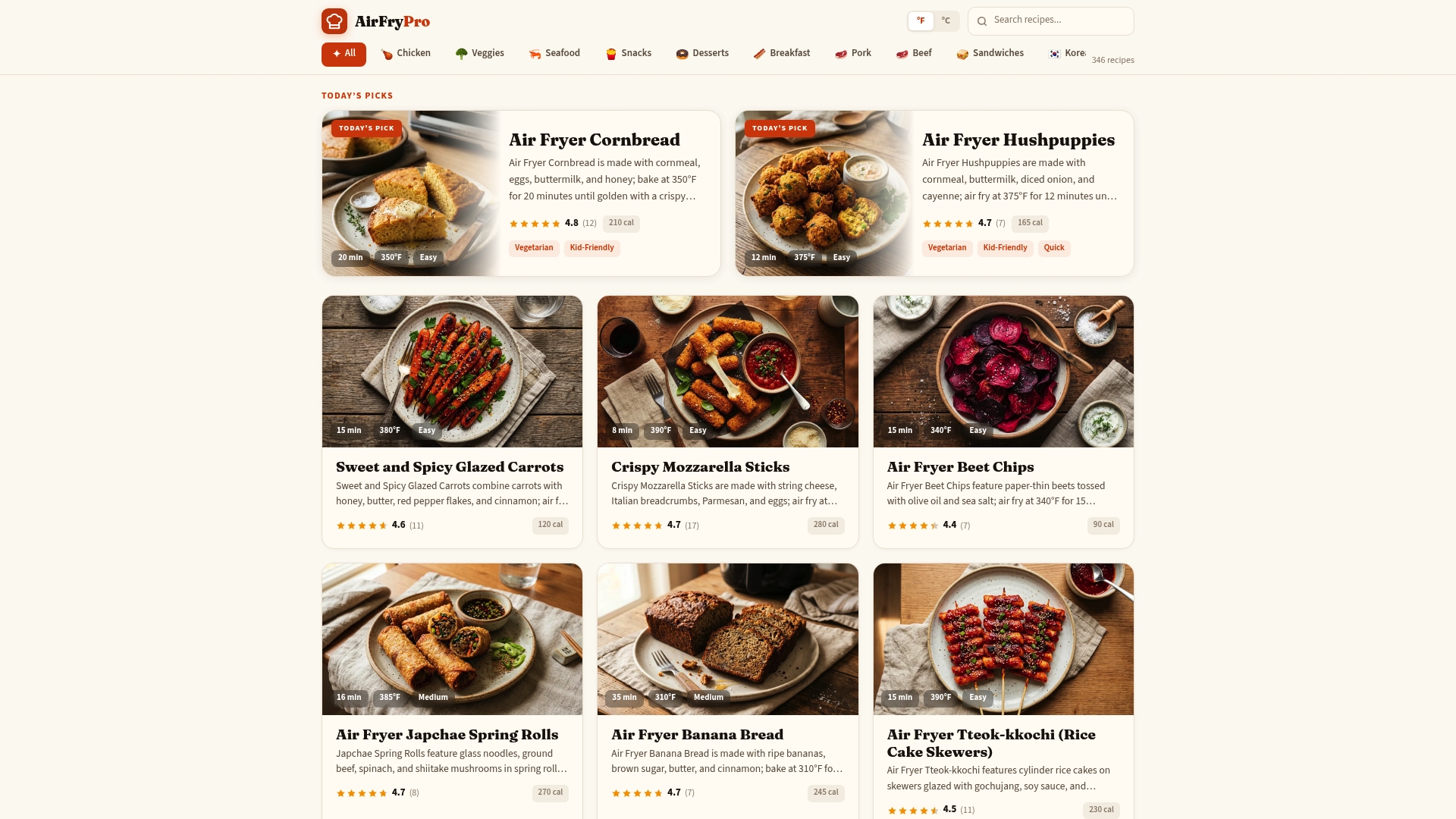
The comprehensive air fryer time and temperature guide becomes your reliable reference for cooking anything confidently and perfectly. Whether you are preparing vegetables, proteins, or frozen convenience foods, you will find exact settings that deliver consistent results. The oven to air fryer conversion calculator makes adapting your favorite traditional recipes simple, automatically adjusting temperatures and times to account for the air fryer's efficient cooking method.
Pro Tip: Bookmark perfect air fryer recipes on your phone or tablet to keep expert advice and fresh recipe ideas at your fingertips whenever inspiration strikes.
Join thousands of home cooks who have transformed their kitchens with AirFry Pro's practical resources and supportive community. Weekly recipe updates keep your meals exciting, while professional tips help you master new techniques and avoid common mistakes.
FAQ
How do I avoid overcrowding the air fryer basket?
Do not fill the basket above half its capacity to ensure proper air circulation around each piece of food. Crowding the air fryer basket can lead to unevenly cooked food and sogginess. Cook in batches if needed and shake or rearrange food halfway through cooking to promote even crisping. Consult the air fryer cooking guide for batch cooking strategies.
Can I cook frozen foods in the air fryer?
Yes, frozen foods like fries, chicken nuggets, and waffles are perfect for air frying with minimal prep required. Air fryers can cook frozen foods quickly, such as fries and waffles, with a crispy texture. Adjust the cook time slightly less than oven instructions and check for doneness a few minutes early. Try the air fryer frozen fries recipe to see how simple and delicious frozen foods become.
What oils are best to use in an air fryer?
Choose oils like avocado, canola, or light olive oil with smoke points above 400°F for optimal results. Use oils with higher smoke points and small amounts to enhance browning without burning. Avoid heavy oil pools to prevent smoke and preserve the natural flavor of your ingredients. A light spray or one to two teaspoons per batch provides enough fat for excellent browning.
Do I need to flip food during air frying?
Flipping or shaking food halfway through cooking ensures even browning and crispiness on all sides. Set a timer reminder at the midpoint of your cooking time to check and rearrange food. Smaller items like fries or vegetables benefit from a quick basket shake, while larger pieces like chicken breasts need manual flipping. This simple step dramatically improves texture and appearance.
How do I prevent my air fryer from smoking?
Excess oil, food residue, or high fat ingredients can cause smoking during cooking. Clean the basket and drip tray thoroughly before each use to remove buildup. Use minimal oil and avoid cooking extremely fatty foods at maximum temperature. If smoke occurs, reduce the temperature slightly and ensure proper ventilation in your kitchen. Regular maintenance prevents most smoking issues.