TL;DR:
- Air fryers can produce crispy, flavorful food without using oil by circulating hot air.
- Proper preparation, dry ingredients, and suitable coatings are key for achieving crispy, oil-free results.
- Oil-free air frying enhances natural flavors, promotes healthier eating, and involves engaging in routine cooking habits.
Craving that satisfying crunch of fried food without the greasy aftermath? You are not alone. Millions of home cooks have turned to air fryers hoping to get crispy, delicious meals with less fat, only to end up with soggy vegetables or bland proteins and wonder what went wrong. The good news is that crispy results with minimal oil are absolutely achievable, and going completely oil-free is more realistic than most people think. This guide walks you through exactly how to do it, from understanding your appliance to troubleshooting your results.
Table of Contents
- Understanding air frying without oil
- What you need for oil-free air frying
- Step-by-step guide: Air frying without oil
- Common mistakes and how to avoid them
- How to verify results and adjust your method
- Why oil-free air frying is a game changer (and what most guides miss))
- Try delicious oil-free recipes for every taste
- Frequently asked questions
Key Takeaways
| Point | Details |
|---|---|
| No oil needed | Air fryers can deliver crispy, tasty food without the need for oil. |
| Proper prep is essential | Dry, seasoned food and the right accessories make oil-free air frying more successful. |
| Adjust for best results | Check doneness, spacing, and time to perfect your oil-free methods. |
| Explore new recipes | You can make a variety of healthy, flavorful dishes with oil-free air frying. |
Understanding air frying without oil
Air fryers work by blasting food with rapid, circulating hot air inside a compact chamber. That constant airflow is what creates the crispy exterior you love, not oil. Oil is traditionally used in cooking to transfer heat, add flavor, and help browning. In an air fryer, the machine does most of that work on its own.
So why do so many recipes still call for oil? Mostly habit. Some foods genuinely benefit from a tiny bit of fat for texture or flavor, but a huge number of ingredients cook beautifully without any added oil at all.
Foods that perform best without oil:
- Vegetables with natural moisture (zucchini, mushrooms, bell peppers)
- Starchy foods like frozen fries or tater tots (they already contain fat)
- Proteins with natural fat content (chicken thighs, salmon, sausage)
- Tofu pressed dry and seasoned well
- Pre-marinated foods using soy sauce, citrus, or aquafaba
One common myth is that oil-free air frying always produces dry, flavorless food. That is simply not true. The key is choosing the right ingredients and using the right coatings or marinades. Another myth is that you need expensive accessories or special settings. You do not.
Here is a quick comparison to help you decide when oil matters and when it does not:
| Factor | With oil | Without oil |
|---|---|---|
| Browning | Faster, deeper color | Slightly lighter, still crispy |
| Calories | Higher | Lower |
| Flavor | Richer, fattier taste | Cleaner, ingredient-forward |
| Sticking risk | Lower | Slightly higher |
| Best for | Lean proteins, breaded items | Vegetables, fatty proteins, snacks |
If you are exploring plant-based cooking, vegan air fryer recipes are a fantastic starting point since many already skip the oil entirely. And if you are curious about when oil does add value, knowing more about olive oil can help you make smarter choices when you do decide to use a small amount.
What you need for oil-free air frying
Getting great oil-free results starts with having the right setup. You do not need a lot, but a few key tools make a real difference.
Essential tools and accessories:
- Air fryer (basket-style or oven-style both work)
- Silicone tongs for flipping without scratching
- Perforated parchment liners or silicone mats to prevent sticking
- A small spray bottle filled with water or citrus juice for light moisture
- A wire rack if your model supports elevated cooking
Silicone mats or perforated parchment paper can help prevent sticking and make clean-up easier, which is especially helpful when cooking without the natural lubricating effect of oil.
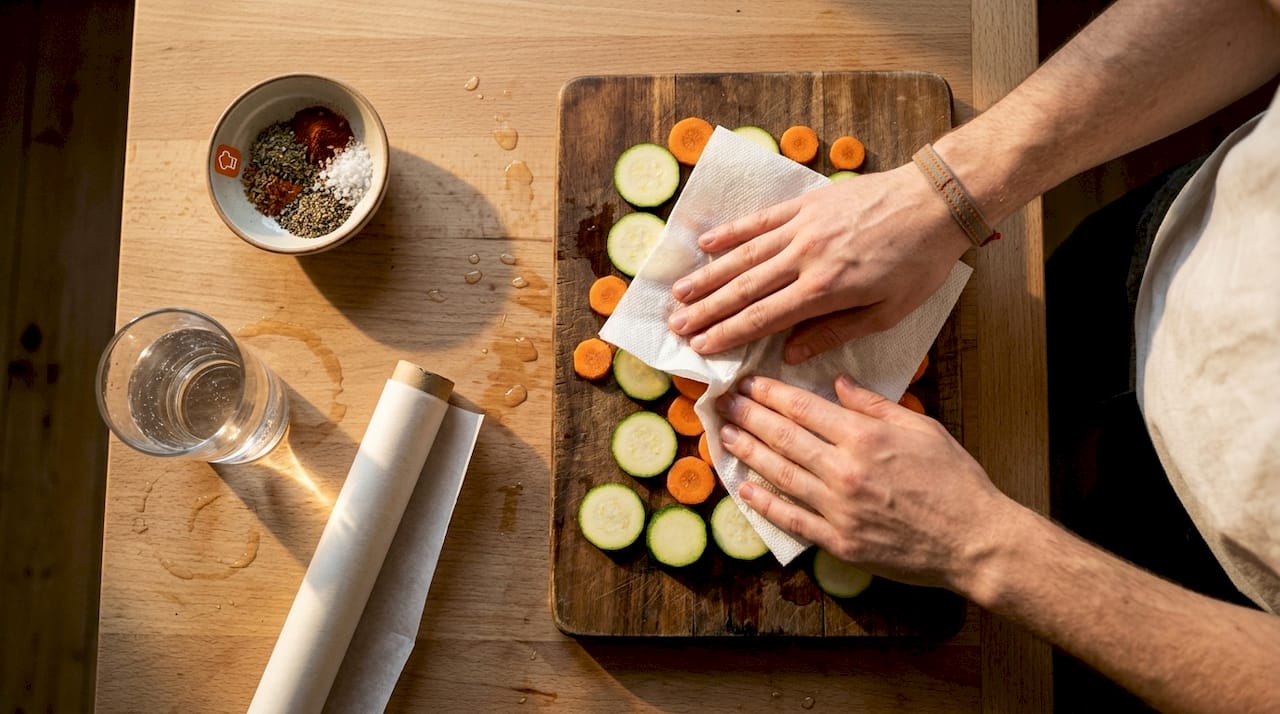
Food preparation matters just as much as tools. Before anything goes into the basket, pat your ingredients dry with a paper towel. Moisture on the surface of food creates steam, and steam is the enemy of crispiness. Once dry, season generously with spices, herbs, or dry rubs.
| Tool | Purpose | Tip |
|---|---|---|
| Perforated parchment liner | Prevents sticking, allows airflow | Cut to fit your basket size |
| Silicone mat | Reusable non-stick surface | Rinse and reuse for easy cleanup |
| Spray bottle | Light moisture for browning | Use water, citrus juice, or broth |
| Wire rack | Elevates food for even airflow | Great for proteins and thick cuts |
| Silicone tongs | Flip food without damage | Avoid metal tools that scratch |
Pro Tip: If you want a hint of browning without oil, mist your food lightly with water or lemon juice halfway through cooking. The moisture helps the surface caramelize slightly without adding any fat.
For those who batch cook on weekends, these tools are also perfect for meal prep recipes where you want consistent, healthy results across multiple dishes. And if you follow a plant-based diet, check out vegetarian air fryer recipes that are already built around oil-free techniques.
Step-by-step guide: Air frying without oil
Ready to cook? Follow these steps for reliably crispy, oil-free results every time.
- Choose the right food. Start with ingredients that have some natural fat or moisture content. Chicken thighs, salmon, mushrooms, and pre-seasoned tofu are all excellent choices for beginners.
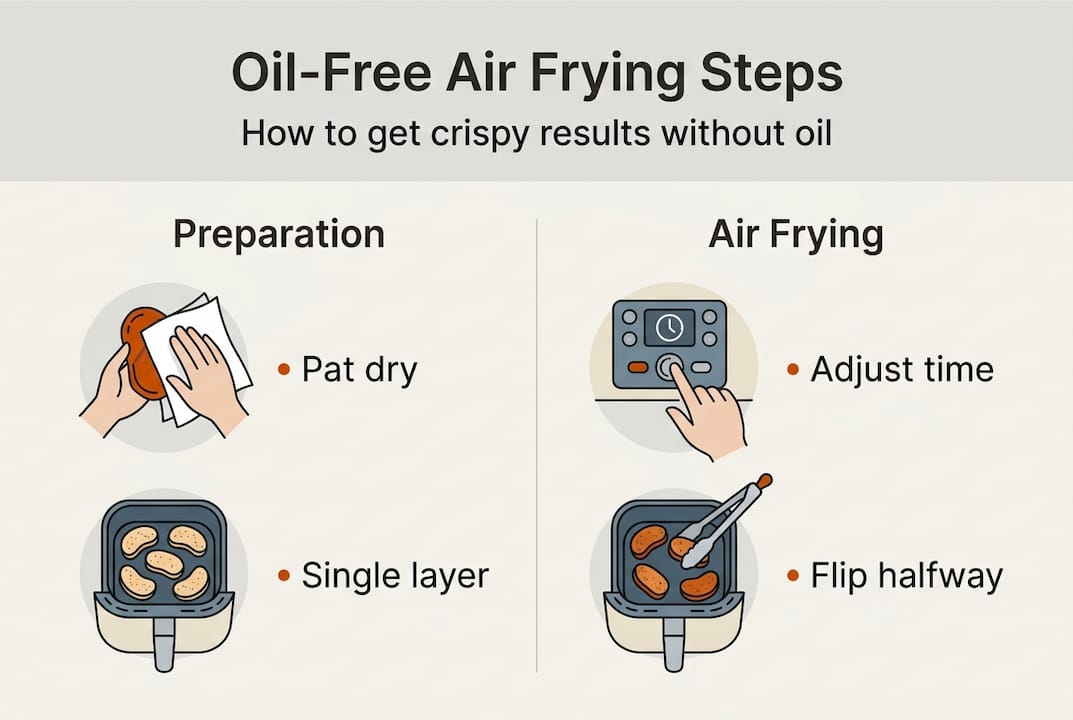
- Pat everything dry. Use paper towels to remove surface moisture. This single step has the biggest impact on crispiness.
- Season generously. Use dry spices, herbs, garlic powder, smoked paprika, or nutritional yeast. For proteins, marinate in soy sauce, citrus juice, or aquafaba (the liquid from canned chickpeas) for at least 15 minutes.
- Add a dry coating if desired. Panko breadcrumbs, cornmeal, or a mix of nutritional yeast and spices create a crispy shell without any oil. Press the coating firmly onto the food so it sticks.
- Preheat your air fryer. Run it at your target temperature for 3 to 5 minutes before adding food. A cold start leads to uneven cooking.
- Arrange in a single layer. Leave space between each piece so hot air can circulate freely. Never stack or pile food.
- Set time and temperature. Most vegetables cook well at 375°F for 10 to 15 minutes. Proteins typically need 380°F to 400°F for 15 to 25 minutes depending on thickness.
- Shake or flip halfway through. This ensures even browning on all sides.
- Check and adjust. If the food looks pale, add 2 to 3 more minutes. If it looks done early, pull it out and check the interior.
Crunchy textures without oil are achievable by adjusting temperature, time, and using the right coatings. Experimenting with these variables is how you dial in your specific air fryer model.
Pro Tip: Add a tiny pinch of baking powder to your dry coating mix. It reacts with heat to create extra bubbles on the surface, giving you a noticeably crispier crust without any fat.
For lower-carb meals, low-carb air fryer recipes use many of these same techniques. If you avoid dairy, dairy-free air fryer recipes are another great resource for oil-free inspiration.
Common mistakes and how to avoid them
Even with the right tools and steps, a few common errors can ruin your results. Here is what to watch out for:
- Overcrowding the basket. Overcrowding causes soggy results because trapped steam cannot escape. Cook in batches if needed.
- Using wet batters. Traditional batter (like beer batter) does not work in an air fryer. It drips through the basket and burns. Stick to dry coatings.
- Skipping the preheat. Cold air fryers cook unevenly and extend your cook time, leading to dried-out food.
- Not patting food dry. Wet food steams instead of crisping. Always dry your ingredients first.
- Using too much seasoning with salt early. Salt draws out moisture. Season with salt right before cooking, not during marinating.
- Ignoring the flip. Forgetting to shake or flip halfway through leads to one side being perfectly crispy and the other side being soft.
For those following a gluten-free lifestyle, gluten-free air fryer recipes offer coating alternatives like rice flour or certified gluten-free panko that work beautifully without oil.
Important: Never use cooking sprays with propellants (like aerosol cans) directly in your air fryer basket. The chemicals in propellant-based sprays can damage the non-stick coating over time. Use a refillable mister bottle with plain water or broth instead.
Also worth noting: if you are curious about which cooking fats are actually worth using on the rare occasions you want a touch of fat, understanding canola oil facts can help you make an informed choice.
How to verify results and adjust your method
Knowing when your food is done and actually delicious takes a little practice. Here is how to read the signs and fine-tune your approach.
How to check for doneness:
- Color: Golden brown or deep amber usually signals a good crisp. Pale beige means it needs more time.
- Texture by touch: Use tongs to gently press the food. It should feel firm, not squishy.
- Sound: Crispy food makes a light crackling sound when tapped with tongs.
- Internal temperature: For proteins, use a meat thermometer. Chicken should reach 165°F; fish should hit 145°F.
Air fryers vary by model, so checking visually and by touch is essential for accurate results. What works at 380°F in one machine may need 400°F in another.
Adjusting for different food types:
- Vegetables: If they come out limp, increase temperature by 10°F and reduce cooking time slightly to avoid drying out.
- Proteins: If the outside is browning too fast while the inside is still raw, lower the temperature and extend the time.
- Snacks and coated items: If the coating falls off, press it more firmly before cooking and make sure the food surface is slightly tacky from a marinade or a light mist of water.
Getting family feedback is genuinely useful here. Ask if the texture is satisfying, if the seasoning is bold enough, and if the portion size feels right. Small tweaks based on real feedback make your oil-free cooking more enjoyable week after week. For high-protein meal ideas that benefit from these adjustments, high-protein recipes are worth bookmarking.
Why oil-free air frying is a game changer (and what most guides miss)
Most articles about oil-free air frying stop at calorie counts. Yes, skipping oil saves calories. That is true but also kind of boring as a reason to change how you cook.
What actually matters more is what oil-free cooking unlocks in terms of flavor creativity. When you remove oil from the equation, you stop masking ingredients with fat and start tasting them directly. Spices hit differently. Vegetables taste brighter. Proteins taste cleaner. This is why oil-free cooking pairs so well with bold global flavors, think Korean gochugaru, smoky chipotle, or za'atar.
The other thing most guides skip is the habit side of this. Getting consistent results means cooking oil-free regularly, not just once. Involve your household. Let kids shake the basket. Let a partner choose the seasoning. When oil-free air frying becomes a shared routine rather than a solo health project, it sticks. For vegan inspiration that already embraces this philosophy, there is no shortage of bold, oil-free ideas to try together.
Try delicious oil-free recipes for every taste
Now that you have the method down, the best next step is putting it into practice with recipes designed specifically for oil-free air frying. AirFry Pro has a growing collection of recipes built for home cooks who want real flavor without the extra fat.
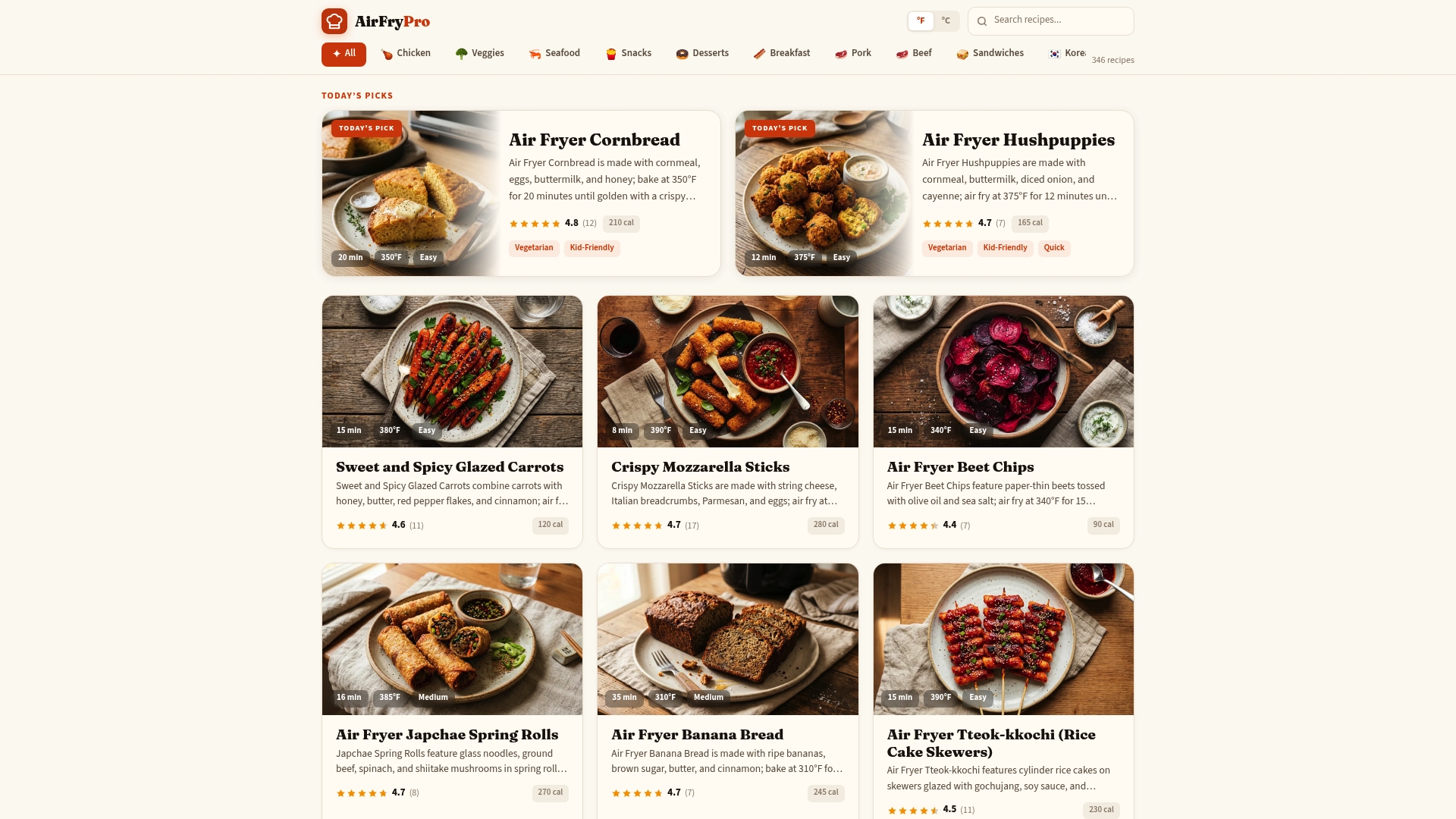
Browse vegetarian recipes packed with crispy plant-based ideas, explore meal prep recipes for efficient weekly cooking, or dive into vegan recipes that prove oil-free cooking is anything but boring. Every recipe on AirFry Pro includes cooking times, temperatures, and tips so you can get great results on your first try. Subscribe for weekly updates and keep your air fryer working hard for your health goals.
Frequently asked questions
Do I need to use any oil at all in an air fryer?
Oil is optional in an air fryer since hot air circulation does the crisping work. A light spritz of water or broth can boost browning if you want it without adding fat.
What foods can I air fry without oil?
Vegetables and proteins turn crispy thanks to hot air circulation even without oil. Most vegetables, lean proteins, tofu, and snacks like chickpeas or frozen fries work great with zero added oil.
Why is my air-fried food not crispy without oil?
Overcrowding the basket is the most common cause of soggy results. Arrange food in a single layer, pat it dry first, and use a dry coating for best crispiness.
Is oil-free air frying healthier?
Using little or no oil in an air fryer significantly reduces fat and calories compared to deep frying, making it a genuinely healthier cooking method for everyday meals.