Air fryer cooking looks simple until your chicken comes out dry, your fries are still soft, or your fish is somehow both burnt and undercooked at the same time. The frustrating truth is that up to 8 minutes difference can exist between models cooking the same food at the same temperature. That gap is enough to ruin dinner. The good news is that once you understand what drives cooking time variability, you can take control of your results every single time. This guide breaks down the mechanics, the model differences, and the practical steps to get consistent, delicious meals out of your air fryer.
Table of Contents
- Understanding cooking time in air fryers
- How cooking time impacts quality and healthiness
- Comparing air fryer models: Cooking time differences
- Optimizing cooking times for consistent, delicious results
- Why mastering cooking time is the ultimate air fryer skill
- Explore expert resources for air fryer mastery
- Frequently asked questions
Key Takeaways
| Point | Details |
|---|---|
| Cooking time varies widely | Even similar air fryer models can differ by up to 8 minutes for the same food. |
| Perfect doneness needs adjustments | Experimenting with time and temperature is essential for achieving the ideal texture and taste. |
| Healthier results through technique | Shorter, monitored cook times preserve nutrients and limit oil use. |
| Test your own air fryer | Tracking your model's performance gives you consistent, repeatable results. |
Understanding cooking time in air fryers
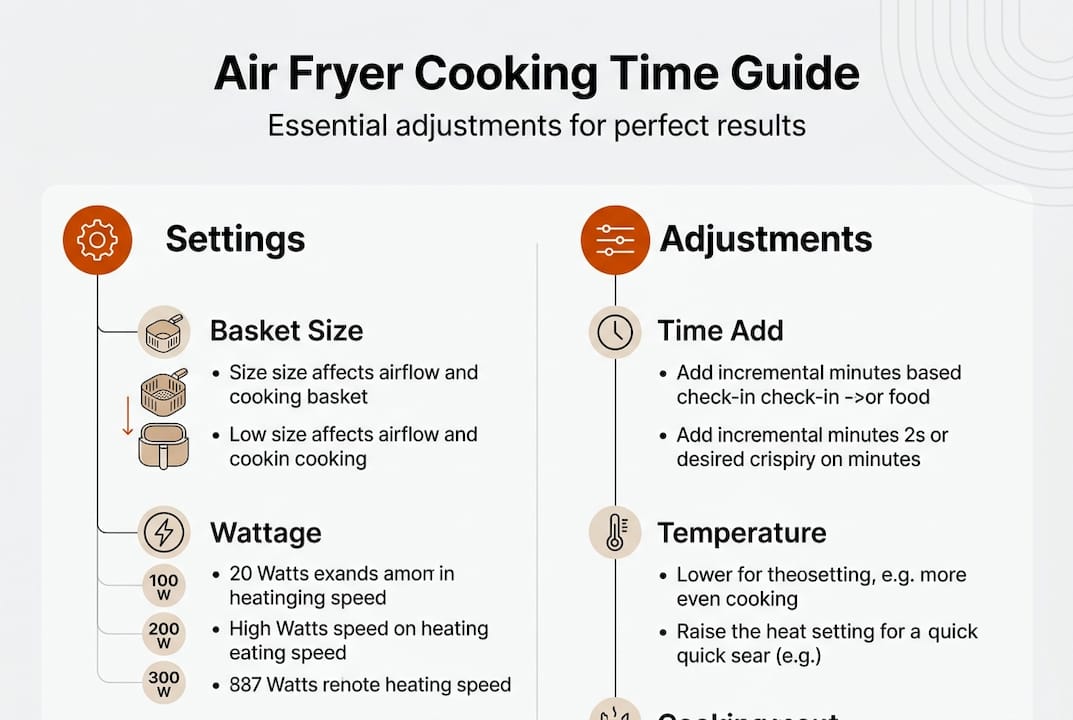
Most people assume air fryers work like small convection ovens with a timer. They do, but the details matter a lot more than that. Three main factors drive how long your food actually needs to cook: fan speed, wattage, and basket size. Change any one of those, and your cooking time shifts.
Here is what makes each factor important:
- Fan speed controls how fast hot air circulates around your food. A faster fan means more heat contact per second, which shortens cooking time.
- Wattage determines how quickly the heating element reaches and holds the target temperature. Higher wattage models recover heat faster after you open the drawer.
- Basket size affects how crowded your food gets. A larger basket spreads food out, improving airflow. A smaller one forces food to stack, blocking circulation and extending cook time.
Unlike microwave ovens, which have a standardized watt rating system, air fryers have no universal benchmark. A 1500-watt model from one brand may cook very differently from a 1700-watt model from another, because the fan design and basket shape also play a role. This lack of standardization is exactly why the same food at 180°C can take 16 minutes in one air fryer and 24 minutes in another.
"True air fryer cooking is essentially dehydration through rapid convection, not frying in oil. The crisp you get comes from moisture leaving the surface of the food, not from an oil barrier."
That distinction matters for timing. Because crispness depends on moisture removal, even small changes in airflow or temperature can shift your results significantly. Our time and temperature guide walks through the specific settings for dozens of foods, and the air fryer cheat sheet gives you a quick reference when you need it fast.
Once you accept that your model is unique, you stop chasing generic recipe times and start building your own reliable baseline.
How cooking time impacts quality and healthiness
Getting the time right is not just about avoiding burnt food. It directly shapes flavor, texture, and nutritional value. Cook something too long, and you are not just overcooking it. You are actively pulling moisture out of the food in a way that turns tender chicken into something closer to jerky.
Here is how cooking time affects your outcomes step by step:
- Under-cooked food stays soft and pale. The surface never reaches the temperature needed to trigger browning, so you lose both crispness and flavor development.
- Perfectly timed food hits that sweet spot where surface moisture evaporates fast enough to crisp the outside while the inside stays juicy and fully cooked.
- Over-cooked food loses too much moisture. Texture becomes tough or chalky, and heat-sensitive nutrients like vitamin C can degrade more than necessary.
The health angle here is real. Because air frying uses convection rather than submerging food in oil, you already cut fat and calories significantly compared to deep frying. But that advantage only holds when cooking time is dialed in. Overcooking can push food toward the same dry, dense texture that makes fried food feel heavy, even without the oil.
Getting the time right is what separates a healthy, crispy meal from a dry, disappointing one.
For practical tips on building balanced meals around your air fryer, the healthy meal tips resource covers a lot of ground. And if you want to see just how versatile proper timing makes your cooking, the versatile cooking benefits article is worth a read.
Pro Tip: Always set your timer 2 to 3 minutes shorter than any recipe suggests, then check the food and extend in small increments. This simple habit prevents overcooking and helps you learn your specific model faster.
Comparing air fryer models: Cooking time differences
If you have ever followed a recipe exactly and still ended up with wrong results, your model is almost certainly the reason. The variability across models is not a flaw you can fix. It is just the reality of an unregulated product category where every brand makes its own engineering choices.
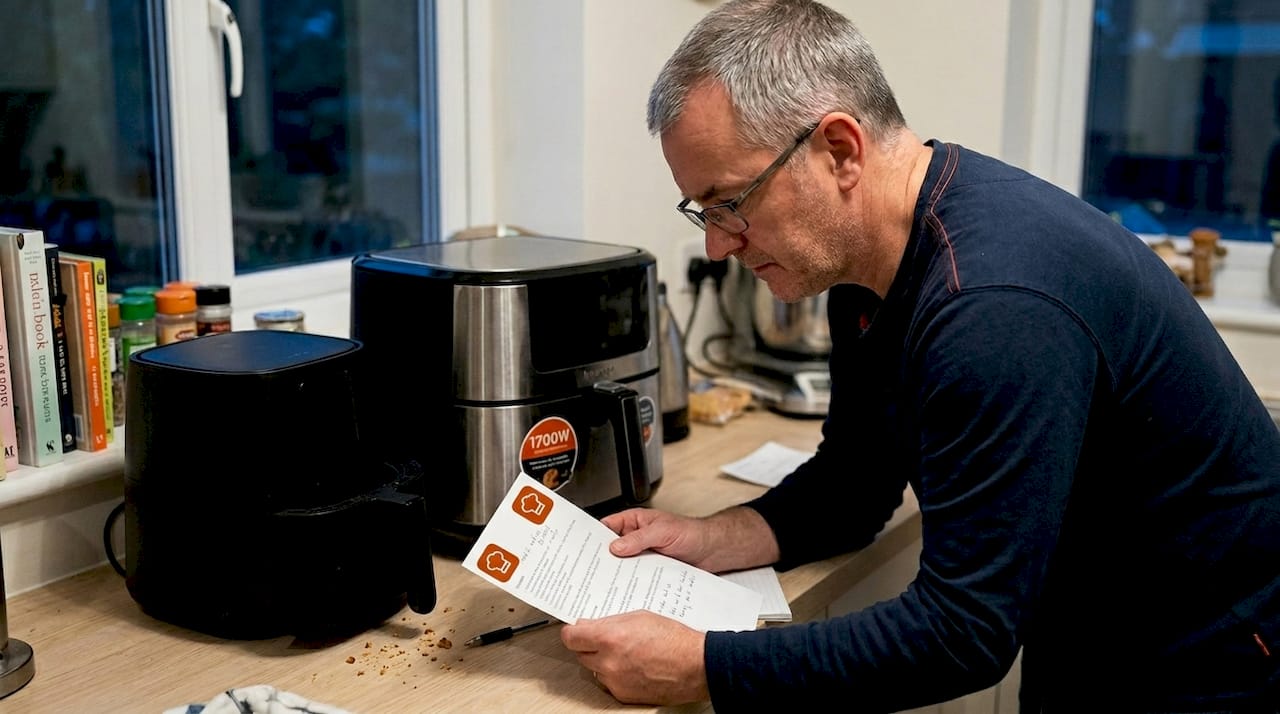
Here is a real-world comparison showing how cooking times for a chicken breast at 180°C (356°F) can vary across three different air fryer types:
| Air fryer type | Wattage | Basket size | Cook time for chicken breast |
|---|---|---|---|
| Compact model (Brand A) | 1200W | Small | 16 minutes |
| Mid-size model (Brand B) | 1500W | Medium | 20 minutes |
| Large capacity (Brand C) | 1800W | Large | 24 minutes |
This table might seem counterintuitive. Why does the higher-wattage model take longer? Because the larger basket means more air volume to heat, and food placed in a bigger basket often has more space around it, which changes how heat transfers to the surface.
Before you buy a new air fryer or adapt a recipe, ask yourself these questions:
- What is the wattage of my model compared to the recipe source?
- Is my basket significantly smaller or larger than average?
- Does my model use a top-mounted or bottom-mounted heating element?
- How old is my air fryer? Older models can lose heating efficiency over time.
Our conversion calculator helps you adjust times and temperatures between models quickly. If you are cooking protein-heavy meals like keto recipes, getting these adjustments right matters even more because fat content also affects how fast food cooks.
Optimizing cooking times for consistent, delicious results
Knowing why times vary is useful. Having a system to find the right time for your model is what actually changes your cooking. Because variability means you must test your own model, the fastest path to consistency is structured experimentation.
Follow this method:
- Pick one food to start with. Chicken thighs, frozen fries, or salmon fillets all work well as test subjects because you eat them regularly and know what good results look like.
- Start 20% below the recipe time. Check the food at that point and note the result in a notebook or phone app.
- Extend in 2-minute increments until you hit the texture and doneness you want. Record the final time.
- Repeat with the same food twice more to confirm your result is repeatable, not a fluke.
- Build your personal cheat sheet from these results. After testing 10 to 15 foods, you will have a personalized reference that beats any generic recipe guide.
Here is a starting point table to help you begin:
| Food | Starting time (at 180°C) | Common adjustment |
|---|---|---|
| Chicken breast | 14 minutes | Add 2 to 4 min if thick |
| Frozen fries | 12 minutes | Add 2 min for extra crisp |
| Salmon fillet | 8 minutes | Reduce 1 min if thin |
| Broccoli florets | 7 minutes | Add 1 min for char |
Pro Tip: Keep a small notebook in your kitchen drawer specifically for air fryer notes. Write the food, weight, temperature, time, and a one-word result like "perfect" or "dry." Within a month, you will have a personalized guide that no website can match.
The full cooking time guide and cheat sheet give you a strong starting framework, and the meal prep recipes section shows you how to apply consistent timing across batch cooking sessions.
Why mastering cooking time is the ultimate air fryer skill
Most air fryer content focuses on recipes. Follow this recipe, get this result. That approach works until you change your model, your ingredient size, or your altitude. Then the recipe fails and you are back to guessing.
The cooks who get the best results consistently are not the ones with the best recipes. They are the ones who understand their machine. They know that testing your specific model is not optional extra work. It is the actual skill.
There is a hidden benefit here that most guides skip entirely. When you experiment with timing and record your results, you build genuine culinary confidence. You stop being dependent on someone else's instructions and start making real decisions in the kitchen. That shift changes how you cook everything, not just air fryer meals.
Cooking time mastery also makes you adaptable. If a friend gives you their air fryer while yours is broken, you can recalibrate in one session. If you switch to a new model, you have a testing framework ready to go. The time guide gives you the reference points, but your own notes give you the real knowledge.
Recipes are a starting point. Timing mastery is the destination.
Explore expert resources for air fryer mastery
Ready to put everything you have learned into practice? AirFry Pro has the tools and recipe collections to make that process faster and more rewarding.
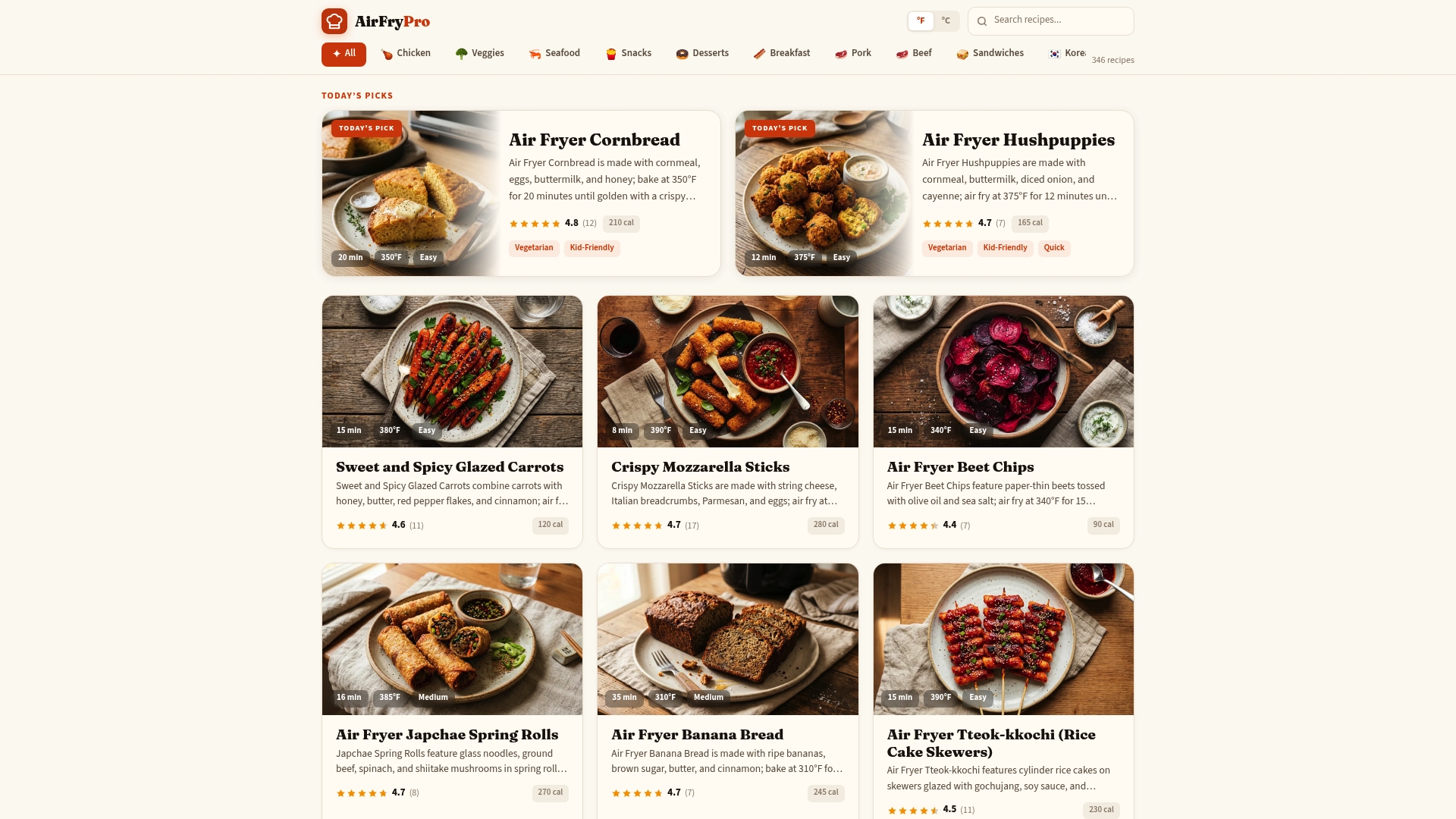
Browse the keto air fryer recipes and vegan recipes collections to find dishes specifically designed with optimal cooking times in mind. Every recipe includes prep time, cook time, calorie counts, and difficulty levels so you always know what you are working with. Grab the cheat sheet for a quick-reference tool you can keep on your fridge or phone. Whether you are just starting out or refining your technique, these resources give you a reliable foundation for every meal you make.
Frequently asked questions
Why does my air fryer cook food faster or slower than recipes suggest?
Cooking times differ because every model has its own fan speed, wattage, and basket size. These factors combine in unique ways, which is why up to 8 minutes difference can exist between models cooking the same food at the same temperature.
How can I find the right cooking time for my air fryer?
Start with a time shorter than the recipe suggests, check the food, and record your result. Because variability means testing your model is essential, use a cheat sheet or conversion calculator as your starting framework and adjust from there.
Does longer cooking risk drying out food in an air fryer?
Yes. Since air frying works through convection and dehydration rather than an oil barrier, overcooking pulls too much moisture from food and can affect both texture and nutrient levels.
Are all air fryer models equally healthy?
All air fryers reduce oil use compared to deep frying, but only consistent cooking time ensures you get the best flavor and nutrition. Crisp through dehydration means overcooking can still compromise the quality of an otherwise healthy meal.