TL;DR:
- Achieving crispy air fryer results relies on proper prep, drying, and correct placement.
- Using minimal oil and specific coatings enhances crunch while reducing fat.
- The air fryer is best for quick, healthy, small-batch cooking rather than large-volume feeding.
Getting food truly crispy in an air fryer sounds simple until you pull out a batch of soggy fries or rubbery chicken wings. The good news is that crispy air fryer results are absolutely achievable with the right techniques. Air fryers circulate hot air rapidly around food, forming a brittle, golden crust with far less oil than traditional frying. This guide covers the science behind crispiness, the prep steps that matter most, a clear step-by-step method, and practical troubleshooting so you can stop guessing and start cooking with confidence.
Table of Contents
- How air fryers make food crispy: The science explained
- Essential tools and preparation: What you need for crispy results
- Step-by-step method: How to get perfectly crispy air fryer foods every time
- Troubleshooting and advanced tips: Avoiding common soggy mistakes
- Perspective: Why chasing 'deep-fryer crisp' isn't the goal for home cooks
- Discover easy, healthy crispy recipes for your air fryer
- Frequently asked questions
Key Takeaways
| Point | Details |
|---|---|
| Crispiness from airflow | Rapid hot air circulates around food, browning and crisping without deep oil frying. |
| Prep is crucial | Dry food surfaces, use minimal oil, and preheat for the best crunchy results. |
| Smart techniques | Two-temperature methods, coatings like cornstarch, and avoiding moisture boost crisp. |
| Healthier than frying | Air fryers deliver up to 97% less oil than deep fryers without sacrificing texture. |
| Perfect for small batches | Air fryers give pro-level crunch for 1–4 servings but aren't for large crowd cooking. |
How air fryers make food crispy: The science explained
Understanding what happens inside your air fryer basket makes every recipe easier to get right. Air fryers work by pushing hot air at roughly 2.5 meters per second around food in a compact, enclosed basket. That speed and containment are exactly what separates an air fryer from a standard convection oven, and they are the reason your food browns so quickly.
Three key reactions drive crispiness. First, the Maillard reaction kicks in above 285°F, browning proteins and sugars on the food's surface to create that familiar golden color and deep flavor. Second, gelatinization happens when starch granules absorb moisture and swell before the hot air dehydrates the outer layer into a crisp shell. Third, protein denaturation firms up the structure of meat and eggs, giving them a satisfying bite. The Maillard reaction above 285°F is triggered with as little as 1 to 2 teaspoons of oil per pound of food, which is far less than deep frying ever requires.
Air-fried foods use 1.2% oil vs. 44.8% for deep-fried versions, yet still score 8 to 9 out of 10 for crispness in real-world tests. That is a reduction of 75 to 97% in oil content without sacrificing crunch.
Here is how air frying compares to other cooking methods:
| Method | Oil used | Typical cook time | Crispness score |
|---|---|---|---|
| Air fryer | 1 to 2 tsp per lb | 15 to 25 min | 8 to 9/10 |
| Deep fryer | 2 to 4 cups | 5 to 10 min | 9 to 10/10 |
| Convection oven | 1 to 3 tbsp | 25 to 40 min | 6 to 7/10 |
| Standard oven | 2 to 4 tbsp | 30 to 50 min | 4 to 6/10 |
The air fryer wins on speed and health without a major crispness trade-off. For anyone curious about cutting oil even further, air frying without oil is possible for certain foods like tortilla chips and thin vegetables. For everything else, a light coating remains the best path to consistent golden results. Check out our time and temperature guide to match settings to specific foods.
Essential tools and preparation: What you need for crispy results
Now that you know what makes air-fried foods crispy, here is what you will need to get the best results every time. The right tools and a few smart prep habits make a bigger difference than most people expect.
Core equipment you need:
- A quality air fryer with a basket or tray design
- An instant-read thermometer to verify internal doneness
- A fine-mist oil sprayer (not aerosol cooking spray)
- Heat-safe tongs for flipping without scratching
- Stacking racks if your model includes them, for cooking two layers at once
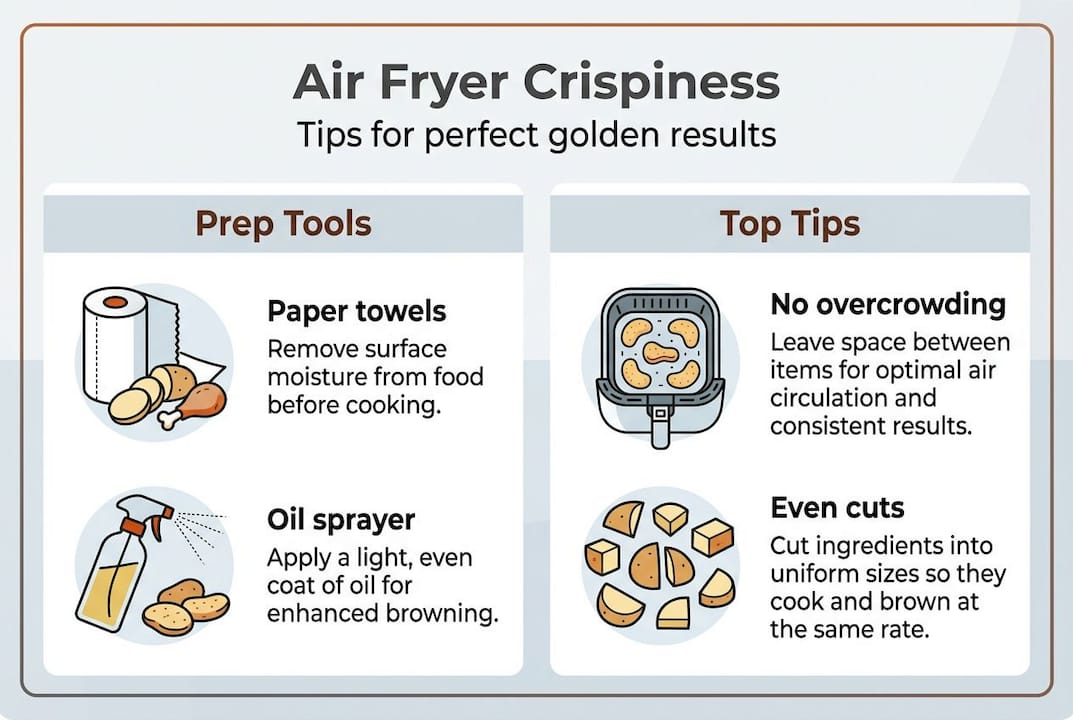
Ingredient prep is where most home cooks lose their crispiness before the food even enters the fryer. Patting dry, preheating, and avoiding overcrowding are the three non-negotiable habits for consistent results. Moisture on the food's surface turns to steam in the basket, which softens the crust instead of crisping it. Use paper towels to dry chicken thighs, fish fillets, tofu, and vegetables thoroughly before seasoning.
Oil choice matters too. High smoke point oils hold up to the heat without burning or leaving a bitter taste.
| Oil type | Smoke point | Best use |
|---|---|---|
| Avocado oil | 520°F | All-purpose, proteins, fries |
| Canola oil | 400°F | Vegetables, breaded items |
| Light olive oil | 465°F | Chicken, fish, potatoes |
| Coconut oil | 350°F | Sweet items, low-temp cooking |
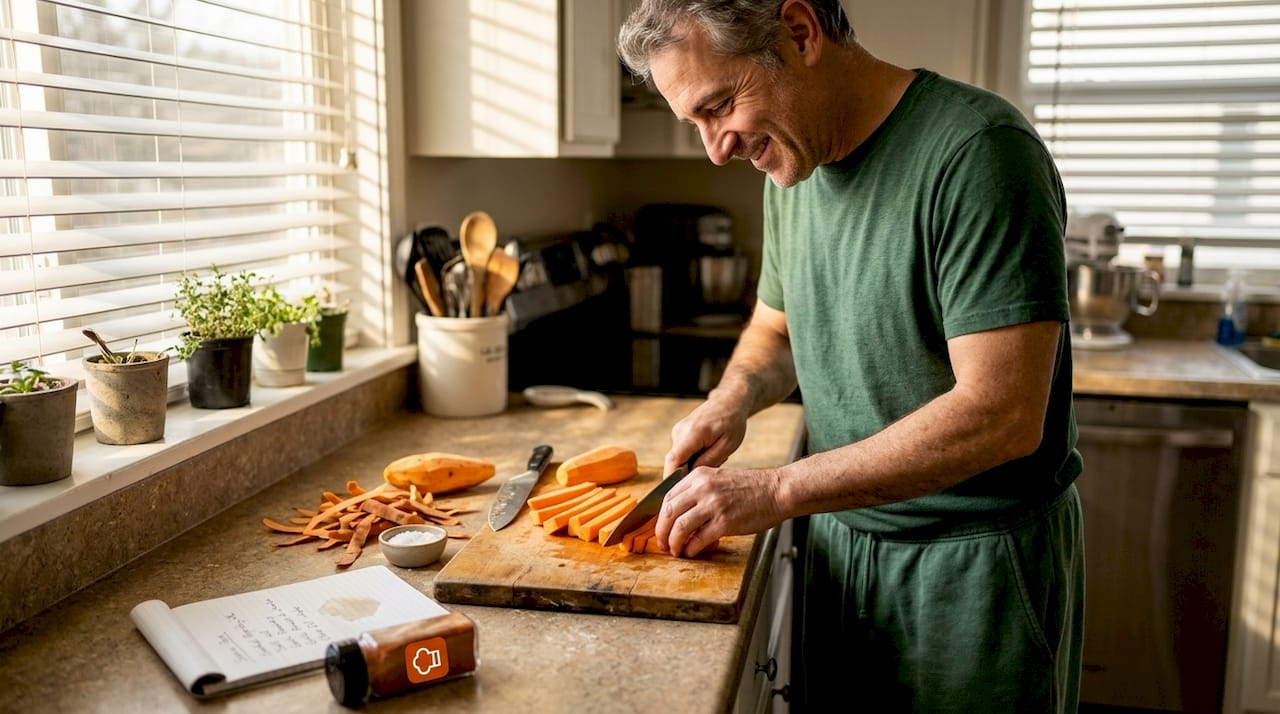
Uniform sizing is another underrated factor. Cut vegetables and proteins to similar sizes so everything finishes cooking at the same time. Uneven pieces mean some parts overcook while others stay raw or soft.
Pro Tip: Never spray aerosol cooking spray directly onto a nonstick air fryer basket. The propellants in aerosol cans break down nonstick coatings over time. Use a refillable mist sprayer with your preferred oil instead. Our air fryer cheat sheet includes oil amounts and prep tips for dozens of common foods.
Step-by-step method: How to get perfectly crispy air fryer foods every time
With your tools and prep in place, you are ready for the step-by-step process behind crispy air fryer meals. Follow this sequence and you will get consistent results across almost any food.
- Preheat your air fryer for 3 to 5 minutes. Starting with a hot basket helps food begin crisping immediately rather than slowly warming up. Most models reach 375 to 400°F quickly.
- Dry and season your food. Pat everything dry, then toss in a bowl with oil and seasoning. Bowl-tossing coats food more evenly than spraying after placement.
- Arrange in a single layer. Every piece needs airflow on all sides. Stacking or crowding creates steam pockets and soft spots.
- Cook at the right temperature. Most foods crisp best between 375°F and 400°F. Use our air fryer time and temperature reference for specific foods.
- Shake or flip halfway through. This exposes the bottom side to direct airflow and heat, evening out the browning on all surfaces.
- Use a two-temp or flash finish for extra crunch. Preheat, single-layer placement, and a flash finish at higher heat in the final 2 to 3 minutes pushes surface crispness to the next level without overcooking the interior.
For coatings, cornstarch or baking powder added to your dredge significantly improves crunch. Baking powder raises the surface pH of chicken skin, causing it to bubble and blister beautifully. Cornstarch creates a lighter, crispier shell than flour alone on items like crispy air fryer fries.
Pro Tip: For breaded items like chicken tenders or zucchini fries, press the coating firmly onto the food before air frying. Loose breading falls off and burns on the basket floor, leaving your food uncoated and pale.
Air-fried foods consistently score 8 to 9 out of 10 for crispness while using up to 97% less oil than deep-fried versions. That is not a compromise. That is a genuine upgrade for daily home cooking.
Troubleshooting and advanced tips: Avoiding common soggy mistakes
Even with the right method, snags and soggy textures happen. Here is how to troubleshoot and elevate crunch when things go sideways.
Common problems and their fixes:
- Soggy bottom: Food is sitting in its own moisture. Elevate with a rack or flip more frequently.
- Pale, soft coating: Basket was overcrowded or food was not dried before cooking. Cook in smaller batches.
- Smoke from the basket: Fat dripping onto the heating element. Add a small amount of water below the basket to prevent smoking from fatty foods.
- Coating falls off: Not pressed firmly enough, or food was too wet when breaded.
- Sticking to basket: Wet marinades or sauces applied before cooking cause sticking. Add sauces in the last 2 minutes only.
- Uneven browning: Pieces were different sizes or the basket was not shaken halfway through.
For advanced crunch, try these techniques. A dry brine with salt and baking powder applied to chicken skin 1 to 2 hours before cooking draws out surface moisture and creates a dramatically crispier result. For potatoes, parboiling in alkaline water before air frying roughens the surface and maximizes crispiness. Swapping regular flour for rice flour in your dredge creates a lighter, crunchier coating on chicken and fish.
Moisture is enemy number one for crisp. Airflow is your best friend. Every technique in this guide comes back to those two principles.
For low-carb cooking, keto air fryer recipes often rely on almond flour or pork rind coatings, which behave differently from wheat-based dredges. Keep them thin and press them firmly to avoid a crumbly, soft result.
Perspective: Why chasing 'deep-fryer crisp' isn't the goal for home cooks
After troubleshooting, it is worth resetting expectations about what crispy really means when air frying at home. Here is an honest take: trying to perfectly replicate fast-food deep-frying at home is the wrong goal, and it sets you up for frustration.
Air fryers are not deep fryers. They are purpose-built for daily convenience, speed, and health. The air fryer excels at speed, health, and serving 1 to 4 portions, and that is exactly where it shines. When you cook a single batch of chicken thighs or a handful of fries for two people, the air fryer delivers faster, cleaner, and healthier results than any other method in your kitchen.
Where it struggles is volume. Trying to cook for six people at once means multiple batches, and the first batch gets cold while the last one finishes. That is not a flaw. That is just the tool being used outside its ideal range.
The best mindset is to treat air frying as its own cooking style, not a substitute. Embrace what it does well: surface dehydration, quick browning, minimal cleanup, and genuinely satisfying crunch on keto air fryer meals and vegan air fryer options alike. Once you stop comparing it to a deep fryer, you will enjoy every single batch far more.
Discover easy, healthy crispy recipes for your air fryer
You now have the science, the tools, the method, and the troubleshooting know-how to get genuinely crispy results from your air fryer every time. The next step is putting those skills to work with recipes built specifically for air frying.
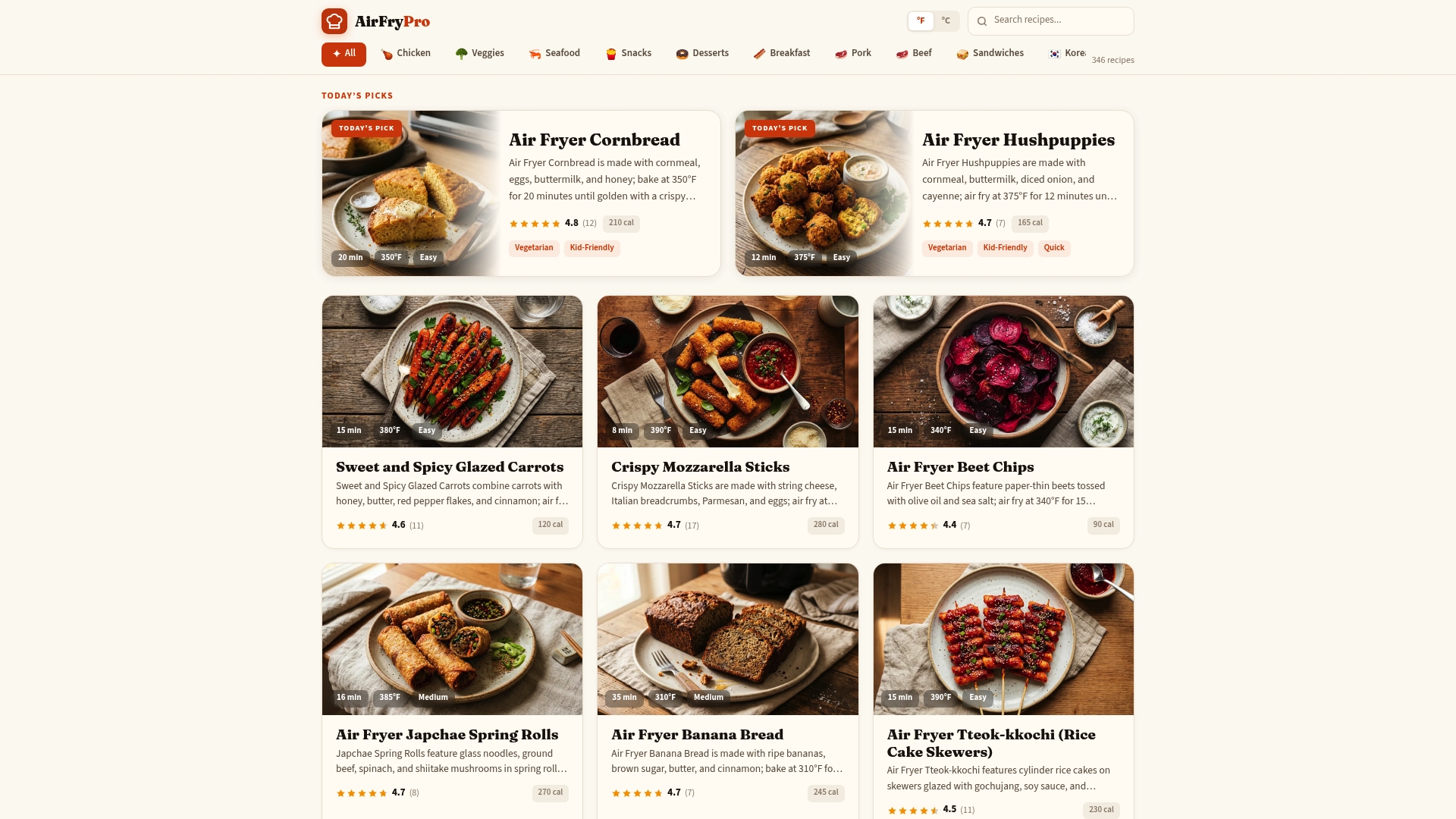
At AirFryPro, we have organized our full recipe library so you can find exactly what fits your lifestyle. Browse keto air fryer recipes for low-carb crispy favorites, explore vegan air fryer recipes for plant-based crunch, or dive into meal prep air fryer recipes to batch-cook for the week ahead. Every recipe includes temperature settings, timing, and difficulty ratings so you never have to guess. Subscribe to our weekly updates and get fresh recipe ideas delivered straight to your inbox.
Frequently asked questions
What foods get the crispiest in an air fryer?
Potatoes, chicken with dry coatings, and breaded vegetables achieve the best crispiness. Cornstarch slurry fries and rice flour dredge on chicken consistently deliver top-tier crunch in real-world tests.
Why are my air fryer foods soggy instead of crispy?
Excess moisture, overcrowding, or blocked airflow are the usual culprits. Moisture is crispiness's main enemy, so always dry your food thoroughly and cook in a single layer.
Does adding oil help with crispiness in air fryers?
Yes. A small amount of oil, around 1 to 2 teaspoons per pound, tossed or brushed on before cooking, is key. Minimal oil enables Maillard browning and creates a golden, crispy crust without excess greasiness.
How do I know if I'm overcooking my air fryer food?
If food comes out too dark, dry, or hard, reduce the cook time or lower the temperature slightly. Two-temp or flash methods give you more control over the final crisping stage without risking overcooked interiors.